


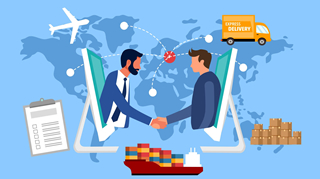
Once you have built a successful UK business, many owners wonder, what do I do now? Perhaps it is time to expand your business overseas to reach new markets.
Expanding a business internationally can be quite the challenge but it has clear rewards. To ensure a smooth transition overseas there are certain steps that should be followed.
Step one: Choose your target market
Selecting the correct country to expand your business to is imperative for success, there are several factors that should be considered when choosing the target county.
The most important thing to consider is the customer demand in the country you would like to expand to, as after all people must want to use your services for the expansion to be profitable.
Considerations should also be taken regarding the ease of doing business and the competitive landscape on the proposed country.
Step two: Understanding local compliance
Every country has different rules and regulations when it comes to tax and commercial compliance.
When expanding internationally it is imperative that you understand the local legal and regulatory landscape of the country.
When expanding internationally you should check:
- Local VAT or GST
- IP and Trademark protections
- Product safety standards
- Customs duties and documentations
- Local tax and obligations
Even minor oversights can create delays or costly compliance issues.
Step three: Glocalisation
When expanding internationally your products and services must match the need of consumers in that country, just because something works in the UK does not necessarily mean it will work abroad.
Adapting products to fit local languages, visuals, safety warnings and pricing can help brands stand out in foreign markets.
McDonalds is an excellent example of this, every country has a different menu based on the local cuisine, for example the Teriyaki Mc burger in Japan and onion rings in Australia.
These changes allowed for McDonalds to grow to be the global conglomerate we know it to be today.
Step four: Building local engagement
While many thing logistics are the only part of expanding internationally, building relationships with the locals will help with engagement.
Nobody is going to want to invest in a company that doesn’t speak their language, doesn’t understand their culture and that can’t offer support within their time zone.
That is why business owners planning to expand should offer local customer service channels and create country specific social media channels which can be used for both visibility and customer service.
Step five: Managing cash flow
Once you have decided on the where, when, what, and who it is time to consider the how. Money is the thing that will get you to where you need to be.
Figuring out international money can be tricky, that’s what we are here for.
At Reanda we are here to advise you on the best financial practices when operating a business abroad.
Our talented team can offer advice on local tax registration requirements, employment and social security regulations along with business registrations abroad.
Get in touch today for advice on expanding your business internationally.