


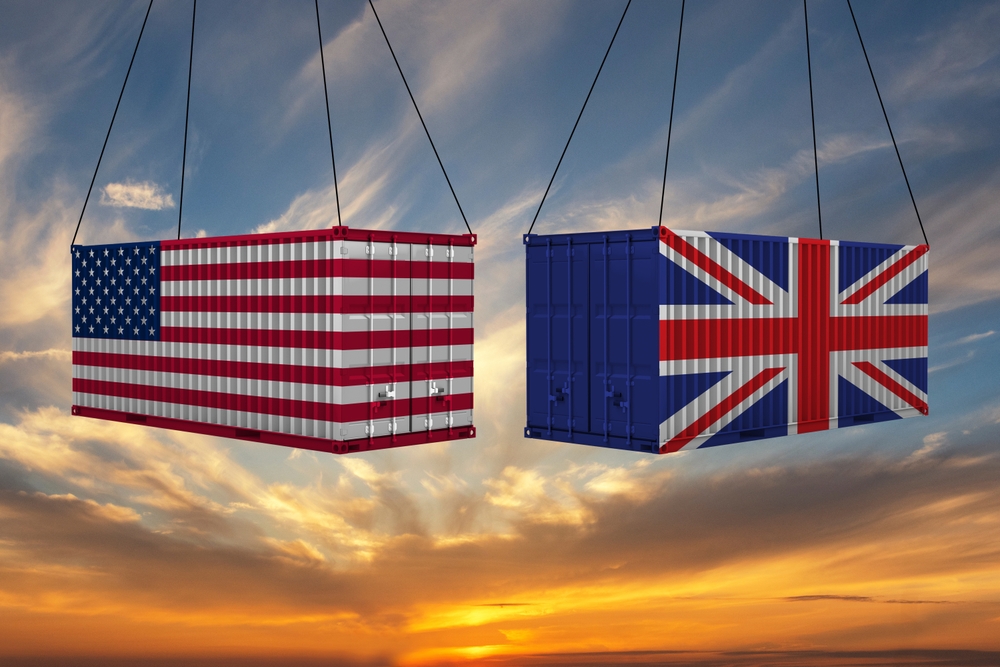
New trade uncertainty has emerged after President Donald Trump introduced a new 10 per cent global tariff on imports into the US.
While it is lower than the 15 per cent rate he had proposed, the move has unsettled markets and left UK importers questioning what is next.
What is the new 10 per cent US tariff?
The new levy is a 10 per cent duty applied to imported goods entering the US.
It sits on top of existing Most Favoured Nation (MFN) duties and increases the effective cost of exporting to the American market.
The tariff replaces previous reciprocal tariffs that had been introduced under emergency powers legislation but were struck down by the Supreme Court of the United States.
In a six-to-three majority ruling, the court found that the previous measures, implemented under the International Emergency Economic Powers Act (IEEPA), were unlawful.
President Trump acted quickly to reinstate tariffs through an executive order and this allowed him to do so without congressional approval.
The new tariff has taken effect immediately and will initially apply for 150 days under Section 122 of the Trade Act of 1974.
How have international markets reacted to the new US tariff?
Stock markets fell and the US dollar weakened on the morning of 24 February 2026, after President Trump announced the new tariff.
European indices, including Germany’s DAX, France’s CAC 40, the Euro Stoxx 50 and Spain’s Ibex 35, were all trading in negative territory during the early hours.
The Financial Times Stock Exchange (FTSE) was also down and slipped by less than 0.2 per cent by 10 am.
These tariffs have created uncertainty in the market and could significantly disrupt supply chains.
What do the US tariffs mean for UK businesses?
UK exporters will face immediate higher costs when selling into the US.
Unless contracts allow for price adjustments, firms may need to take on part of the tariff and reassess their margins.
With the possibility of the tariff rising to 15 per cent or being extended beyond 150 days, businesses will face difficulty forecasting revenues and negotiating long-term deals.
How should UK businesses respond to the US tariffs?
With the tariffs already in effect, businesses must be proactive in assessing how their trade contracts and relationships are affected.
Businesses trading with the US should consider:
- Reviewing supply chains – Assess reliance on US imports and exports.
- Communicating with suppliers and customers – Clarify who bears tariff costs under existing contracts.
- Reassessing pricing models – Factor the 10 per cent levy into margin calculations and renegotiate where possible.
- Scenario modelling – Prepare for a potential rise to 10 per cent or extension beyond July 2026.
- Forecasting cash flow – Tariff costs can impact working capital and profitability.
- Diversifying markets – Reduce reliance on a single export location.
- Monitoring changes – Stay alert to UK Government responses and further US announcements.
How can we support your business through trade uncertainty?
Our expert team can help model the impact of tariffs on your margins and cash flow so you can protect your pockets and stay competitive.
For further advice on how tariffs will affect your business, contact our team today.